
How to fertilize indoor plants
Most houseplants are not hungry every week — and fertilizer is not a cure for bad light or swampy soil. Feed lightly in the growing season, pause when growth slows, and treat the bottle as a helper, not a weekly ritual.
Set a reminder for each plant instead of guessing. Free on iOS and Android.
Feed when the plant is growing
Indoor plants use nutrients mainly while they are putting out new leaves and roots — typically spring through early autumn in bright homes. In short winter days, many species slow down; pushing fertilizer then often sits unused in the mix.
New plants and freshly repotted ones usually need a few weeks before any feed. Fresh mix often already has a light charge, and stressed roots burn easily. See when to repot houseplants if you just upsized the pot.
Fix light and watering first. A plant starving for daylight or sitting wet will not “green up” because you added fertilizer. Pair feeding with solid basics from how often to water indoor plants and how much light houseplants need.
Species notes in the the species database are a starting range — heavy feeders and slow growers are not the same plant. Your room still decides how fast growth (and appetite) actually show up.
What the numbers on the bottle mean
The three numbers on fertilizer (NPK) are nitrogen, phosphorus, and potassium. For leafy houseplants, a balanced formula or one with a bit more nitrogen is usually enough — you do not need a different bottle for every pot.
Liquid, water-soluble, and dilute “every watering” products are easier to control indoors than dumping a heap of strong granules into a small pot. Slow-release pellets can work if you follow the label and do not stack them with liquid feeds every week.
Organic and synthetic both feed plants; the difference is mostly speed and smell, not magic. Pick one approach and stay consistent rather than mixing mystery potions.
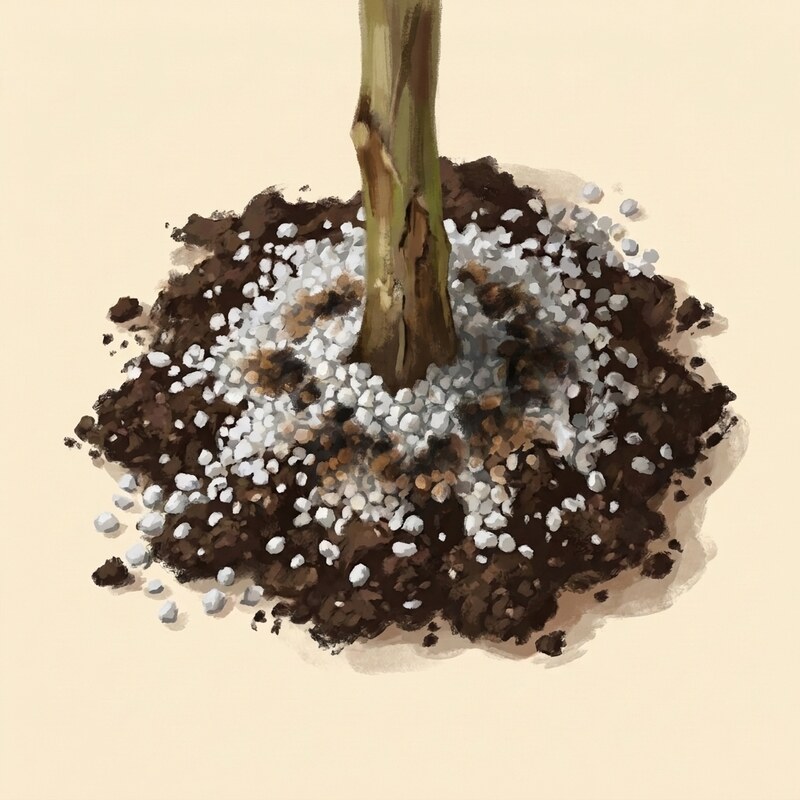
Skip “miracle” doses. More fertilizer does not mean faster growth — it usually means salt burn and crispy tips. Half strength, on a growing plant, beats full strength on a struggling one.
How to apply without burning roots
Water first if the mix is bone-dry, or fertilize with your normal watering so nutrients move through damp soil. Pouring concentrate onto dry mix is a classic way to scorch roots.
Dilute to the label’s indoor or “weak” rate — many people safely use half of what outdoor garden labels suggest. Apply until a little runs from the drainage holes, then empty the saucer.
Flush the pot with plain water every month or two in the growing season if you feed often, especially with hard tap water. White crust on the soil surface is a hint salts are building up.
Never fertilize a plant that is wilting from drought or drowning in wet mix. Recover watering first; feed only when the plant looks stable again.
Too much, too little, and the winter pause
Overfeeding shows as crispy brown tips, white crust on soil, sudden leaf edge burn after a strong dose, or soft decline with wet salty mix. Flush thoroughly with plain water and skip feed for several weeks.
Underfeeding is slower: pale new growth, tiny leaves, and stalled summer growth on an otherwise healthy plant in good light. Try a gentle regular feed before you rewrite every care habit.
Yellow leaves have more causes than “needs food.” Check water and light first — why leaves turn yellow walks that checklist. Fertilizer is rarely the first fix.
In winter (or in a dark flat year-round), pause or cut way back. Resume when days lengthen and you see new growth. Succulents and many slow growers need far less feed than thirsty tropicals.
Make feeding easy to remember
Once you know a plant’s rhythm, watering reminders can include fertilizing on that plant’s schedule — monthly in summer for many foliage plants, rarer for succulents — instead of a vague “feed everything Sunday.”
Keep plants in your plant collection with species attached so you are not guessing which pot is a heavy feeder. Shared a shared household help when more than one person waters and feeds.
Treat reminders as a check-in: skip if the plant is stressed, newly repotted, or clearly resting. Tune the interval when seasons change.
Download Planti on iOS or Android if you want fertilizing and watering nudges attached to each plant — free to start, with optional premium for larger collections.