Beginner’s guide to indoor plant care
You do not need a greenhouse. Start with a few forgiving plants, match them to the light you already have, and water when the soil asks — not when guilt does. The habits below are enough to keep most starter houseplants alive.
Pick plants that forgive mistakes
Snake plants, pothos, ZZ plants, spider plants, and many philodendrons tolerate irregular watering and medium light. Save fussy calatheas, ferns that want constant humidity, and finicky variegated collectors’ plants for later.
Buy (or accept) plants that match your brightest window. A low-light corner wants a low-light species, not a sun-loving cactus that will stretch and sulk. “I love this plant on Instagram” is not the same as “this plant loves my north-facing flat.”
One healthy plant teaches you more than five struggling ones. If a first plant dies, treat it as data — wrong light, too much water, or a species that needed more attention than you had — then try again with something tougher.
If you do not know what you brought home, plant identification gives you a name and a care starting point before you invent a schedule.
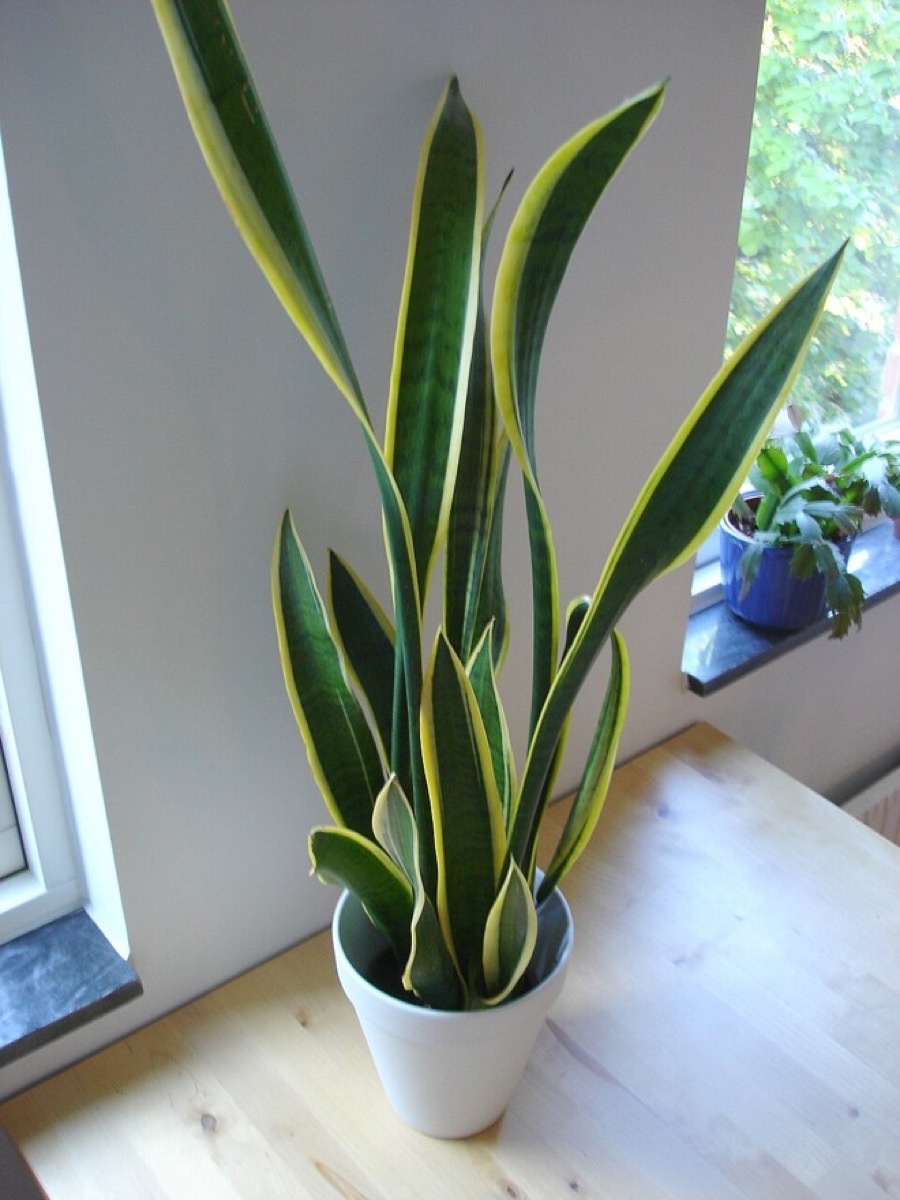
Photo by Martin Olsson · CC BY-SA 3.0

Match the plant to the light you have
Most beginner problems that look like “bad watering” start with the wrong spot. Before you change fertilizer or buy a humidifier, move the plant closer to a bright window and watch it for a week or two.
Bright indirect light means near a window without harsh midday sun cooking the leaves. Direct sun on a south or west sill can scorch thin tropical leaves; many succulents and herbs want that stronger light. A dark corner across the room is low light — only a short list of plants thrive there long term.
Rotate the pot a quarter turn every week or two if one side stretches toward the window. Dust leaves occasionally so they can use the light they get. Grow lights help in winter or windowless rooms, but they are optional when you choose species for the room you already have.
If leaves pale, stretch with long gaps between nodes, or lean hard toward the glass, the plant wants more light. If leaves bleach, crisp, or show brown sun patches, pull it back from the glass or add a sheer curtain.
Water when the soil asks
Check the soil before you pour. Push a finger about two centimeters down — if it is still damp, wait. If it is dry, water thoroughly until excess drains out, then empty the saucer. A light splash that only wets the top trains shallow roots and leaves the bottom dry.
Beginners usually kill plants with kindness: watering on a fixed “every Sunday” habit. A thirsty pothos and a drought-happy snake plant do not share a calendar. When you want the longer version — how much to pour, seasons, and overwatering signs — see how often to water indoor plants.
Yellow soft leaves and soggy soil usually mean too much water, not too little. Crispy edges and soil pulling from the pot wall usually mean the plant waited too long. When in doubt, wait a day and check again.
Room-temperature water and a pot with drainage holes matter more than fancy fertilizer in the first year. Feed lightly in the growing season only after the plant is settled and putting out new leaves.
Pots, soil, and a simple setup
Use a pot with a drainage hole. Decorative cachepots are fine if the plant sits in a nursery pot inside — water, drain, then put it back. Sealed pots without drainage are where many first disasters start.
Most houseplants arrive in a fine nursery mix that works for a while. You do not need to repot on day one. Repot when roots circle the pot heavily, water races through without wetting the mix, or growth stalls for months in the growing season — usually up one pot size, not into a huge planter that stays wet for weeks.
A basic indoor potting mix is enough for pothos and philodendrons. Add chunkier bark or perlite if you keep aroids; use a grittier cactus mix for succulents. Matching the mix to the plant matters more than buying the most expensive bag.
Keep tools simple: a watering can or jug, a saucer, and somewhere bright enough. Pruners and moss poles can wait until you have a plant that actually needs them.
Common beginner mistakes to skip
Do not move the plant every time a leaf looks off. Plants hate constant reshuffling. Change one thing — light or water — then give it time to respond.
Do not drown a plant because an app or a sticker said “water weekly.” Check the soil. Do not ignore pests either: sticky residue, webbing, or tiny flies in the soil are worth a closer look before the problem spreads.
Skip the giant “plant haul” in week one. Five plants you notice beat twenty you forget behind furniture. It is easier to learn care on a small set, then grow the collection on purpose.
If leaves turn yellow and you are unsure why, start with soil moisture and light before assuming disease. Our guide on why leaves turn yellow walks through what to check first.
Keep the collection small and visible
Put plants where you will see them — a sill you pass every morning beats a bathroom you forget. Name them in your plant collection with a room or spot so reminders make sense when you have more than one green blob.
Use watering reminders per plant once you know each rhythm. Treat a reminder as a check-in: touch the soil, then water or skip. Shared homes can use a shared household so care is not one person’s secret chore list.
Watch for new leaves. Growth is the best feedback that light and water are roughly right. A plant that only declines needs a change; a plant that slowly adds leaves means you can keep doing what you are doing.
Download Planti on iOS or Android when you want that structure without a spreadsheet. Core care stays useful on the free tier.